|
Background
The
Waywiser Press is a small independent company, with its main office in the UK,
and a subsidiary in the USA. It was founded in late 2001, and started publishing
in 2002. Waywiser is a literary press, first and foremost, with a special
interest in modern poetry and fiction. From time to time, however, we also issue
books belonging to other literary genres e.g. memoir, criticism, history.
We
are keen to promote the work of new as well as established authors, and would
like to rescue still others from undeserved neglect. |
|
Editorial
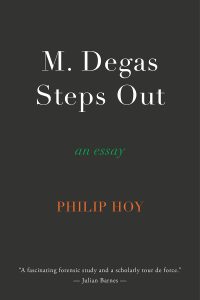
Board Editor-in-Chief Philip
Hoy 
Philip
Hoy was born in London in 1952, and educated at the Universities
of York and Leeds. He has a Ph.D in Philosophy, a subject he has
taught for many years, both in the UK and overseas. As well as
founding and managing The Waywiser Press, he co-founded and manages
Between The Lines, now an imprint of Waywiser, which is devoted
to publishing book-length interviews with contemporary poets.
His most recent publications are W.D. Snodgrass in Conversation
with Philip Hoy (Between The Lines, London, 1998), Anthony
Hecht in Conversation with Philip Hoy (Between The Lines,
London, 1999, 2001), and Donald Justice in Conversation with
Philip Hoy (Between The Lines, London, 2001). An interview
with Hoy concerning Between The Lines was published in the
Dark Horse: "The Interviewer Interviewed: N.S Thompson
talks to Philip Hoy, editor of Between The Lines", The
Dark Horse, 15, Summer 2003: 40-46. This interview can be
read on-line at:
http://www.waywiser-press.com/imprints/darkhorse.html
A
more recent interview, concerning Waywiser and its editorial policy,
was published in issue 5 of Michael Glover's on-line magazine,
the Bow-Wow Shop, and can be read by going to
http://www.bowwowshop.org.uk/page19.htm
Senior American Editor
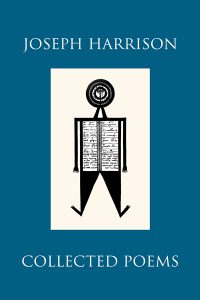
Joseph
Harrison
Joseph
Harrison was born in Richmond, Virginia, grew up in Virginia and
Alabama, and studied at Yale and Johns Hopkins. His book Someone
Elses Name (Waywiser, 2003) was named as one of five
poetry books of the year by the Washington Post. His second book
of poems, Identity Theft, was published by Waywiser in
2008. His poems have appeared in The Best American Poetry
1998, 180 More Extraordinary Poems for Every Day, The Library
of Americas Anthology of American Religious Poems,
the Penguin Pocket Anthology of Poetry, the Penguin Pocket
Anthology of Literature, The Swallow Anthology of New American
Poets, and many journals. In 2005 he was the recipient of
an Academy Award in Literature from the American Academy of Arts
and Letters. In 2009 he received a Fellowship in Poetry from the
John Simon Guggenheim Memorial Foundation. He lives in Baltimore.
Associate
Editors Clive
Watkins

Clive
Watkins was born in Sheffield in 1945. His poems have appeared
widely in magazines, including Agenda, Poetry Wales,
the New Welsh Review, The Rialto, the Dark Horse,
the Hudson Review, the Alabama Literary Review and
the Malahat Review. He has read at venues in the UK
amongst others, at Grasmere (for the Wordsworth Trust) and at
Oxford University and in the USA and Greece. He has written
essays for various journals, on subjects as diverse as Conrad
Aiken, Wallace Stevens, Eugenio Montale, Edward Thomas, E J Scovell
and Michael Longley. He is a tutor for The Poetry School, London.
His collection, Jigsaw, was published by Waywiser in 2003.
Greg
Williamson
Greg
Williamson was born in 1964 and grew up in Nashville, Tennessee.
He was educated at Vanderbilt, Wisconsin-Madison and Johns Hopkins
Universities, and is the author of three collections of poetry,
The Silent Partner (Story Line Press, 1995), Errors
in the Script (Sewanee Writers' Series/The Overlook Press,
2001), and, most recently, A Most Marvelous Piece of Luck
(Waywiser, 2008). Williamson's poetry has earned him the Nathan
Haskell Dole Prize, the Nicholas Roerich Poetry Prize, a John
Atherton Fellowship, and a Whiting Award. He teaches at Johns
Hopkins University, and divides his time between Baltimore, Maryland,
and Duluth, Georgia.
|
| A
note for the curious
"Waywiser" Way"wis`er.
Now Hist. 1651. [Formed after German. wegweiser (= Dutch wegwijzer,
Swedish vägvisare, Danish vejviser), f. weg way
n.1 + weiser, agent-n. f. weisen show.] The English sense
is not found in the other Teutonic languages. In German the word has, besides
its primary sense of "one who or something which shows the way", several
other meanings, the most common being "guide-post", which is also current
in Dutch, Danish and Swedish.] 1.
An instrument for measuring and indicating a distance travelled by road.
Of various
forms, usually operated either by the step of the pedestrian or by the revolution
of the wheels of the vehicle. [Adapted
from the OED]
A
waywiser, as illustrated on the copyright page of John Ogilby's Britannia,
Volume the First: Or
an Illustration of the Kingdom of England and Dominion of Wales: Description
of the Principal Roads Thereof
(M.DC.LXXV)
|