
Uncategorized
Mike White
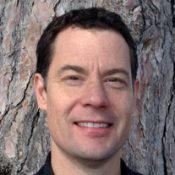 Winner of the 12th annual Anthony Hecht Poetry Prize
Judge: Gjertrud Schnackenberg
Mike White was born in 1971 and grew up in Montreal, Canada. He received a B.A. in English from the University of Toronto, an M.A. in English from McGill University, and a Ph.D. in Literature and Creative Writing from the University of Utah. As a graduate student at Utah, White served as editor-in-chief of Quarterly West, and was co-winner of the Academy of American Poets Larry Levis Prize in 2006. His first book, How to Make a Bird with Two Hands (Word Works, 2012) was awarded the Washington Prize. His poems have been nominated on six occasions for the Pushcart Prize, and have appeared in magazines including The New Republic, Poetry, Ploughshares, The Yale Review, The Threepenny Review, The Iowa Review, Denver Quarterly, AGNI Online, and FIELD. His work can also be found on the Poetry Daily and Verse Daily websites. He currently lives in Salt Lake City where he serves as a faculty member at the University of Utah.
Two poems from Mike White’s Addendum to a Miracle
Addendum to a Miracle
And then, after
asking for silence, and
for silence please, and
for silence way in the back please,
he made of the many fishes
(churning silver
in the brimful baskets)
just one
irrefutable fish, size
of a single loaf of bread,
and the mouths of the multitude
watered, and
the gills of the dying fish
fanned the poison air.
Mike White
Things Pitched
battles
and a rationale
for the same,
curveballs,
change-ups,
a perfect game.
Mike White
Addendum to a Miracle
first appeared on Green Mountains Review Online ; Things Pitched
first appeared in The Threepenny Review.
Cally Conan-Davies
Two poems from Cally Conan-Davies’s Child at the Bay of Fires
followed by a note on the author
Star Sestina
Sometimes you hear a story like this.
Some lives seem to hang by a star
like the single one in the afternoon sky,
the loveliest one that aligns with your face
when your mother calls, and you go in the gate
left open between the house and the flowers.
I come from women who know what flowers
will stand the salt. And it comes down to this:
summers of sea-thrift beyond the gate
and slender sandwort, a five-petalled star,
and fog and butterflies licking your face
when you lie all day looking up at the sky.
There is no limit to the sky
my grandmother sang, sewing a flower
on a gift tea-towel with a look on her face,
alike even then, even in this:
that the angel should sit, not the Christmas star,
at the top of the gum tree by the gate.
A windbreak of driftwood becomes my gate
to a skeleton beach. I hear the whole sky
empty its birds by a wasted sea star.
Night is a field of a different flower.
Grandmother’s headstone, a prayer. Beside this,
the moon looks down with a quartered face.
I turn the pages of her face.
She sits on a pony, she swings on a gate,
this schoolgirl, this nurse, this bride, and this
new mother, bombs grinding the London sky.
Five times, her broken water would flower.
One of her boys went out like a star.
Her mind drew its margins from every star
and suddenly I am face-to-face,
pressed in the book, with a bone dry flower.
Here is her heart. I touch its gate
and heaven springs open, taking up the sky
for she comes of women who make much of this—
this is no end, no end to the sky
or the wild flower by the swinging gate
this is your star, and this is your face
Cally Conan-Davies
What Beauty Sleeps
What beauty sleeps in the suicide house
behind the bolted door
behind the wooded gravel drive,
what dreams does beauty dream inside
the empty hall with blood on the floor?
What beauty sleeps in the suicide brook
unmoving as a stone,
far from friends and talk of war,
far from the fierce and soundless star,
who draws near beauty all alone?
What beauty sleeps by the suicide stove
in the kitchen at Primrose Hill,
with the keys inside when the door blows shut
and every window-crack stopped up,
what hole can beauty hope to fill?
What beauty sleeps in the hospital ward
behind two human eyes
if callers come with undead flowers
and beauty sleeps on where nightmares are
beside a twin who wakes, and cries?
Cally Conan-Davies
Cally Conan-Davies was born in Hobart, Tasmania in 1960. Since completing her post-graduate studies in English and Psychology at Monash University, Melbourne, she has taught at secondary and post-secondary levels, worked as a bibliotherapist and free-lance writer, founded Lit For Life Centre for Creative Reading, and mothered a daughter, the historian Rayne Allinson. She married American writer, David Mason, in 2012, and divides her time between: Newport, Oregon; Manitou Springs, Colorado; and Hobart, Tasmania. Conan-Davies’ poems have appeared in Poetry, The Hudson Review, Virginia Quarterly Review, Harvard Review, Sewanee Review, Quadrant, Subtropics, Hopkins Review, The New Criterion, Southwest Review, The Dark Horse, and many other journals.
Star Sestina
first appeared in Quadrant. What Beauty Sleeps
first appeared in Subtropics.
Martin Edmunds
Two poems from Martin Edmunds’s Polychrome
followed by a note on the author
Petra, Jordan
My laughter
is the crackle
of kindling
at midnight, the moon,
my white goat caught
on a thorn.
You are a man on his knees
peeking through a keyhole
when the door is open. Heaven
is my tent-roof
hung by a rope from the sky.
Sleep with me,
I am sweet tea, I am these
red seeds
on a white plate.
Don’t let your heart
be a bird that starves
with food in its cage!
Martin Edmunds
Ocean
My blue-lipped, unsubtle mother, this summer sea
wants me stretched out naked on her bed.
Her glib tongue’s numbed my pulses. Soothingly,
her kisses cooled the bruises on my head:
fontanelle and temple, ear and eye
ceding their fever to the spray’s plump lips.
Her grey flesh begs my health and youth to die.
Cold grease, her kisses smeared along my lips.
Yet her waters washed away the mortal stain
of childhood’s wishing to remain a child.
Sad fats and acids ate into my brain.
I saw where the dogfish kept his white bones piled.
I saw a mare’s nest float on the ocean, wild
stallions ramp to mount each swaybacked wave.
Horseshoe-crab-tail trocars rasped and filed
my neck free of her torc. The salt-walled cave-
mouth gripped and gaped behind my murdered head.
Crisp sea-foam laced a skullcap round my crown.
No Queen of Egypt fished me into bed.
I was Moses, I dozed and floated, only face down.
I held my breath and did the dead man’s float,
eyes closed, my lashes fanned by gill and fin.
On the third day I began to bloat
till not a wrinkle marred my silvered skin.
Stiff fiddlers picked stitches from that too-tight coat,
my eyelids jimmied open by the blue
crab claws unknotting fascia from nerve tissue.
The pigfish dribbled flesh. I heard the shoat
grunt his hunger. Gold and silver coins
hissed on the waters. What I saw was scales
falling from the mermaid’s dragon tail.
I dipped there where the human woman joins
the salty furrow closing round my cries.
I was her husband. She was no one’s wife.
Her broad flukes stirred the waters into life.
Her sequins pressed pale half-moons in my thighs.
No. Three weeks I drifted while our banns were read
to the bell buoy’s hammering angelus.
Calm nights the stars fell. They lay like spread
petals on the waters over us.
No. Calm nights the stars fell. They lay like bread
upon the water till the dawn wind blew
the seabirds ravening after them, and drew
the plumes of whitecaps crashing on my head.
Waves smashed Atlantis back to pink-grained sand.
The moon is both a grinding wheel and knife.
But we were lovers in a former life!
I held her crescent scepter in my hand.
Martin Edmunds
Martin Edmunds’ first book, The High Road to Taos, won the National Poetry Series. His work has been anthologized by Seamus Heaney and Ted Hughes and has appeared in The New Yorker, A Public Space, The Paris Review, Little Star, Grand Street, The Nation, The Partisan Review, Southwest Review, and Agni. Awards and honors include the “Discovery”/ The Nation Prize and an Artist Fellowship from the Massachusetts Cultural Council. He was an Artist-in-Residence for many years at the Cathedral of St. John the Divine, where he wrote verse plays and libretti for Cathedral productions. He also writes and co-writes screenplays, including an adaptation of a Balzac story for a feature film from Roland/Fine Line, which earned a National Board of Review Award for Special Excellence in Filmmaking.
Petra, Jordan
first appeared in The New Yorker. Ocean
first appeared in Agni.
Heather June Gibbons
Two poems from Heather June Gibbons’s Exploded View
followed by a note on the author
Muse the Drudge
I, hackneyed beauty queen cut
with kitchen knife, whir, tilt off
spin fast, a heavy eddy, I am no
girl-wisp, nor clipped wingtip
nor treachery of baubles, nor branded
by word, nor shut up in a cave
no-body, no birdie, I leak, call me
Sheela-na-gig, Astarte, Dora, cheap
whiskey in cut-crystal, watch it your
earlobe’s in my teeth, I blow shit up
heart-husk, wax drip, I lick you, there
now you’re licked. I, twitchy harlot
I, muse the drudge, poison cup, slipknot
not precious, not spread, here, hold it
to your ear, hear me laughing.
I, kitten-heeled, do drop kick.
I, I, I, beget, taste, hang by threads
of smoke, I cloy, my mouth drips
venery, I weave my own shroud,
burn ink, and dare you, speak of me.
Heather June Gibbons
Diagram
Etched into each fallen leaf is a diagram of a bare tree.
Things come with their own directions. They tell us
what we are about to see will likely appear senseless.
We say we want no part in it, but no one hears us
fall in the woods. We stagger around with the sound off,
the sky a pale bruise, burst capillaries in our cheeks
recording force the way a horizontal cross-section reveals
growth rings in a tree. We are told no one was harmed
in the making-of, the shattered window mere sugar glass,
but I felt the floor quake, I saw a woman’s skin lit
like a lamp. I remember driving under a blue bridge.
Later, I will produce a histogram of the image to better
manipulate the colors. A somewhat random sample
of a hundred observations from the normal distribution
shards of ice angled on the creek breaking against each other.
We hadn’t seen anything of this magnitude before
except for the time the hounds found the wounded elk.
Blood in the snow, a red telephone and a black
telephone in the snow, then a spotted orchid.
What I am showing you is the exploded view.
Cracked bird bath in the snow. Fallen tree, monograph
by a noted dendrologist. His children, heirs to his
headaches, will remember how he squinted at the page.
In spring, his papers will thaw to the contours of bark.
By summer, they will have disintegrated.
Heather June Gibbons
Heather June Gibbons is the author of the chapbook Flyover, and recent poems have appeared or are forthcoming in Eleven Eleven, Jet Fuel Review, New American Writing, and Sixth Finch. A graduate of the Iowa Writers’ Workshop, she teaches creative writing at San Francisco State University. http://www.heatherjunegibbons.com/
Muse the Drudge
first appeared in Best New Poets 2006. Diagram
first appeared in West Branch.
Patrick Errington
Two poems from Patrick Errington’s Second Hand
followed by a note on the author
Leaving Alexandria
They told me as a child to be exact with pain.
Nurse it, they’d instruct, in the swaddling folds
of your brain, in the clay. Let it seed and shiver
out, vein you, plot the skin like an empire
blushes a schoolroom map. I’d not listen. But I have
so much of Alexandria in me, my body, an atlas
cedar at the core, bright as ribbon lightning, little
leafed, or bare, or budding. They have their voices, still,
but no breath, their mouths now forgetting, songbirds
for teeth. Listen. I’m mining down beneath my ribs,
scarring for that scar I stem from. I can so nearly feel it,
a lost city, and a wild of cedar gathered about my skin.
I will make this the new mouth of me. Grackles, soon
will shiver along my lips. I have so much to tell you.
Patrick Errington
They Don’t Make Gods for Non-Believers
When I tell him I’m dying, my doctor says I’ll die
years and years from now if I’m careful, so I will
die, then, I say, but carefully. After all, if it’s worth
doing then it’s got to be worth doing carefully
and my doctor agrees (he should). All the same
you can be too careful, which is why I see him far less
than is, quote-unquote, prudent. My doctor, I mean, not
God. Him, I see so much more than should a devout
non-believer. But never where I expect to – great
storms, great losses and the like. Rather in the pale
residues left behind latex gloves, or the soft patience
of a painkiller. Maybe it’s a sign I’m approaching
the end. Or it may just be the perfunctory depression
of my tongue again, the requisite ah. Ah, as though
comprehending. But let’s face it, comprehension’s
not the issue. I mean, I can comprehend, like glass,
that light, with all its grit and sine, comes apart
into colour, but that hardly warms this halogen, hardly
amounts to understanding. My doctor thinks his is
a look of understanding, with all that plastic wisdom
of sign and symptom, but understanding nothing
of mine. Between you, me, and my god, my God
I’ve got a lot to cower from. Which, I guess, means
I should put faith in one of us. But Him I don’t trust
any more than my doctor, or me, or any more
than anyone else so reliant on terror in their acolytes,
shivering and braille-skinned, deaths confessed to
and calendared. He laughs at my swithering, hands
swaddled in the too-white light, reading my body,
asking who I’ll speak to while I write this, kneeling,
pages closing more quietly than hands on the bed.
Patrick Errington
Patrick James Errington is a poet and translator from the prairies of Alberta, Canada. Winner of several international competitions, his poetry has appeared in numerous magazines and anthologies, including Best New Poets 2016, The Iowa Review, The London Magazine, The American Literary Review, Diagram, The Adroit Journal, Horsethief, and West Branch. A graduate of Columbia University’s MFA programme, Patrick currently lives in Scotland, where he is a PhD researcher at the University of St Andrews.
Leaving Alexandria
first appeared in West Branch. They Don’t Make Gods for Non-Believers
first appeared in The London Magazine.
Nicole Callihan
Two poems from Nicole Callihan’s chigger ridge
followed by a note on the author
chigger ridge
there the sun
did not rise
until we’d been
up for hours
then it
crowbarred
the day
turned the trees
from lead
to silver
turned the dead
to face
the river
the night again
the poet
told me to
go to sleep
wait until
i dreamed
of an angel
and when
the angel speaks
the poet said
listen to her
notice the color
of her dress
blue jean blue
then wake up
and write it
down in
the valley
all night i slept
i was naked
but i was not cold
and lo
i say unto you
the angel
did her bidding
and lo
she offered me
a slopjar
and lo a cat’s eye
marble
and lo she told me
not to be afraid
of the soul
and the grass
on the ledge
in which i lay
made me itch
with a violence
i’d carry away
o if the portrait
of the self
is a pallet
on the floor
if the floor
is as cold as
the night outside
if the night’s
got nothing
on the old man
out back
you say self
and point
to my chest
my head
but what of these
trees this still
star-soaked sky
what of the
cuts and tongues
and tins of meat
what of the self
can be cleaved
from the girl
on the ridge
who in the dark
with a cleaver
stands and lo
i say unto you
lo i say come
with me lo
i say stay
Nicole Callihan
day
to imagine that there had been dusty apples would mean
apples would mean there had been apples maybe in jars
in some cellar jarred up like down at the schoolhouse
baby girl in a jar fetus the science teacher scolded fetus
but he was the kind who believed in monkeys feed us
this day our daily mush let us not be hungry
let our bodies not invisible be let there be a tree
where something grows let us not be mere specimens
when all things commence let us among the things be
Nicole Callihan
Nicole Callihan’s books include SuperLoop (Sock Monkey Press 2014), and the chapbooks: A Study in Spring (Rabbit Catastrophe 2015); The Deeply Flawed Human (Deadly Chaps 2016), and Downtown (Finishing Line Press 2017). Her poems have appeared in, among others, PANK, Plume, Painted Bride Quarterly, The American Poetry Review, and as a Poem-a-Day selection from the Academy of American Poets. Find her at www.nicolecallihan.com.
Dark Horse – Interview
The creation of Between The Lines as a press dedicated to publishing book-length interviews with poets was a singular and distinctive venture. How did it come about?
It was the brainchild of Ian Hamilton. Early in the summer of 1997, I’d been to America to interview W.D. Snodgrass, about whom I was planning to write a critical book. A few weeks after I returned, my old friend Peter Dale suggested that I join him and Ian for lunch. They had known each other since their undergraduate days at Oxford, and met like this at regular intervals. I was invited along on this occasion because Ian had been, and still was, a big admirer of Snodgrass’s early work – he could still recite chunks of Heart’s Needle
– and Peter thought a meeting could be of mutual interest.
I’d not recorded my interview with Snodgrass with a view to publication – I was simply trying to fill gaps in my knowledge about Snodgrass’s life and work prior to starting on my book – but even before I began to transcribe the tapes I got to wondering whether some literary magazine mightn’t be interested, because Snodgrass had spoken very freely, and had said a great deal that was new and interesting. There was one obvious problem, and that was the interview’s length, which was many times that of the average literary interview. However, in the wake of our meeting, and encouraged by Peter and Ian, whom I’d given copies, I wrote to Jon Silkin, to see whether Stand magazine might consider serializing it. Silkin had been an admirer of Snodgrass’s early work, and I knew that he and Snodgrass had met some years earlier and had got along very well, so this seemed like a good place to start. (I could have gone to Agenda, a magazine which had been steadfast in its support of Snodgrass’s work, but most of a recent issue of the magazine had been devoted to celebrating his 70th birthday, and I didn’t think they’d want to give him all this additional space after so small a lapse of time.)
After getting my letter, Silkin rang me to say that Stand would certainly be interested in seeing the interview, but added that the most they could do would be to take 3,500 or so words. Serialization was out of the question. He also said that he wouldn’t be prepared to print anything that looked like a defence of Snodgrass’s most controversial work, The Fuhrer Bunker, which he said read like an exercise in Nazi apologetics. We had a vigorous exchange about this, but it was good-natured enough, and at the end of our conversation I agreed to send him the whole interview, including the longish part devoted to The Führer Bunker. I didn’t like the idea of its being excerpted, but I liked even less the idea of its going completely unpublished.
Just two or three weeks later, and four or five days before Peter, Ian and I had arranged to meet a second time, I opened The Guardian and discovered that Jon Silkin had died. This came as a shock to me, whose only contact with the man had been during this phone-call – I exclude the time, many years earlier, when Silkin had come to my undergraduate hall of residence, hawking copies of Stand — but it came as a still bigger shock to Ian and Peter, who had known him since their Oxford days, and who were his near contemporaries, of course.
We had our meeting, though, and at some point the question came up of what should be done with the interview, now that Silkin was no longer around. Ian said again how much he liked it, but then added that he thought it would be a mistake to send it to any other magazines, since none of them would print the whole thing and most would take rather less than 3,500 words. I asked him what the alternative was, and it was at this point that he dropped his first bombshell: What’s to stop us publishing the thing ourselves, bringing it out as a book?
Even before Peter and I had absorbed the shock of this, Ian dropped a second bombshell: And why don’t we make this the first in a series?
So that’s how BTL was founded, over one of those uneaten meals for which Ian was famous, in Le Piaf, in Wimbledon.
How long had the editors known each other?
Well, as I said, Ian and Peter had known each other since their student days, back in the early Sixties. I’d known Peter since being a school pupil of his between Sixty-Five and Seventy.
And at what point were you joined by J.D. McClatchy?
Sandy McClatchy joined the board rather later, in 1998. He’d been one of BTL’s earliest subscribers, and wrote something very nice about the interview I later did with Anthony Hecht, whom he’d interviewed a few years earlier for The Paris Review. When it dawned on us that having an American editor would be a good idea, Sandy – who’s not only a fine poet, but an accomplished editor, critic and anthologist – was the obvious choice. He’s a very busy man, but fortunately said yes.
There will be advantages and disadvantages with a book-length interview. What can distinguish a book-length from a usual-length?
I’m not sure I can think of any disadvantages, unless they’re the disadvantages of honest toil over theft. A few years ago, John Updike told Martin Amis that giving interviews was something writers ought to avoid, because it rots a writer’s brain, it cretinizes you. You say the same thing again and again, and when you do that happily you’re well on the way to being a cretin.
We have no desire to cretinize the poets we interview, and so work very hard to avoid going over old ground, or going over it in old ways. That’s not an easy thing to do when you have to formulate 100+ questions.
At a specific point you decided to conduct interviews in writing rather than conduct them face-to-face with a microphone and tape-recorder. Could you say how this came about?
A number of the poets we wanted to interview were from overseas. We had no money for airfares, hotel bills, etc., so had to ask them whether they’d mind being interviewed at-a-distance, and in writing. To my surprise, only one person said he couldn’t agree to this, and this was only because English wasn’t his first language, and he was very short of time. The others all seemed perfectly happy about it, and one or two even said they preferred to be interviewed in this way. Anthony Hecht, for example, lamented the verbal laxities that almost always creep into spoken, tape-recorded exchanges.
They are always the better for being editorially removed,
he said, but are still better for being avoided in the first place.
Having had to transcribe and then tidy up a number of tape-recorded interviews since then, I have no hesitation in saying that I agree with him.
Of course, some people speak a lot more correctly and coherently than others – Don Hall says that when he transcribed his Paris Review interview with T.S. Eliot, almost no changes were necessary – but then there are the other hazards of the face-to-face interview to be dealt with – trying to guess at what’s been said when one or other of the participants says something sotto voce, or when a bus roars past or a dog barks … But there’s a more serious reason for preferring written to recorded interviews, and that’s that, if one’s going to be asking a lot of carefully considered questions – questions it will have taken one weeks, perhaps even months, to prepare – one wants the answers to be at least as carefully considered, and it’s highly unlikely that they will be if the poet is having to answer each question as soon as it’s been asked, and can’t mull things over, cross-check, sleep on it …
Am I right in thinking that you’ve made it a contractual obligation that your interviews be conducted in this way?
No. We wouldn’t want to be that inflexible. When Ian agreed to be interviewed by Dan Jacobson last year, he told me that he wanted it to be done face-to-face. I wasn’t about to say no, even though I had my misgivings. Ian was a great talker, and a very funny one, and I knew we could rely on the exchanges with Dan being a good read, a very good read. No, we haven’t said that people can’t do interviews face-to-face; we’ve simply let it be known that our strong preference is for them to be done in writing.
Is there a loss of spontaneity when interviews are carried out in this way, or does it enable the editors to create a more suitable text for reading?
If you ask your doctor for an answer to the question of what’s ailing you, you ought to prefer an accurate answer to an off-the-cuff one, and when I put questions to a poet about his or her work or life, I feel pretty much the same way. It’s not a poet’s first thoughts I’m interested in, it’s his best thoughts, and it’s not to be expected that these will often coincide, especially when one’s questions are as wide-ranging or deep-going as ours aim to be. It’s perhaps also worth adding that what you’re confronted with, when you read the transcript of a face-to-face interview, is only very rarely a verbatim record of what passed between the two parties. The face-to-face interview is almost never the artless thing it sometimes seems.
Certainly some interviewees have provided valuable documentary material and extensive quotes in their written answers that they would not otherwise have been able to under normal circumstances. Do interviewees feel more comfortable with written answers, and more able to say precisely what they want to say?
I believe so. And it’s not at all surprising, given that they are writers, people noted for their ability to express themselves on paper. Those who’ve opted for a face-to-face interview have usually done so just because they were too short of time to work on a written one.
As critical documents, the interviews offer much for the specialist and include meticulously compiled bibliographies to that end, but what about the general reader? Are the interviews designed to get the reader interested in the poetry or do you assume the opposite, that the interviews will appeal to the reader who already knows the poet’s work?
A few years ago, I picked up a copy of The Paris Review and started to read the interview William Gass had given Thomas LeClair back in the Seventies. That interview made few concessions to the likes of me – to people, that is, who’d not read any of Gass’s novels or criticism – but I finished it in a state of high excitement, and went right out and ordered some of his books. I’d like to think that our interviews could have a similar effect, but it’s fair to say that they’ll only be fully appreciated by those who are already familiar with the interviewee’s work, in broad terms, at any rate.
I asked the previous question because the interview is a forum for almost an ars poetica with the respective subjects and perhaps more might be made of this in the future?
Who was it said that Grand practisers have not the leisure to be analytiques
? Whoever it was, he was wrong, as the long list of distinguished poet-critics – Jonson, Milton, Dryden, Johnson, Wordsworth, Coleridge, Arnold, Eliot – alone demonstrates. But not all poets have an ars poetica, or would be prepared to articulate it if they had one, and while we would gladly accommodate those who feel differently, we wouldn’t want our interviewees to think that this is what we’re chiefly interested in.
Given that you only have two English poets (Anthony Thwaite, Ian Hamilton) on your list, does this represent a disaffection with current English poetry, or are you simply favouring poets whom you as editors have a special liking for?
Well, I’d count Gunn an English poet, and I’d count Hamburger one too, which means that four out of the nine poets we’ve featured so far have been English. But in the next eighteen months or so, we’re going to be featuring a number of people you haven’t mentioned – Charles Simic, Peter Porter, John Ashbery, Tom Paulin, Michael Donaghy, Dana Gioia, Rachel Hadas, Timothy Steele and Dick Davis[1] – and of these only two are English, so it could look as though we don’t find English poets over 50 years of age (because of course we’re restricting ourselves to poets over 50) that interesting. There’s probably something to this, but not as much as you might suppose, because the only people we’ve talked about thus far are the poets who’ve agreed to be interviewed by us, and there are a few who haven’t.
I was going to ask you if anyone had declined.
Yes, a small number. Amongst them someone I – though not necessarily my colleagues – would count amongst the most important poets of the last fifty years.
I shan’t ask you to name names.
Thank you, because a couple of the people who began by saying no ended by saying yes, and I shouldn’t want to deter anyone else who may be having second thoughts.
Is there a difference culturally among the various nationalities in the way they respond to interviews?
I’m more struck by individual than cultural differences, but it’s almost certainly too soon to say, because our sample, if you will, is still quite small. Ask me again in 10 years’ time, and I’ll give you a more interesting answer. Hopefully.
Finally, of the 20th century poets no longer with us, whom would you have most enjoyed interviewing and why?
That’s not an easy question to answer. Until one has started in on an interview, one can’t know how well it’s going to go, so much depends on the personalities, the circumstances, the timing. But rather than bore you with a list of the 20th century’s greatest, I’m going to name someone who is still virtually unknown, half a century after his disappearance, and that is Weldon Kees. I came to his work only in the last two or three years, and am a big admirer of it. Most people who do know the name think of him as a poet pure and simple, but in fact he was a kind of 20th century Alberti, an enormously accomplished painter, a good short story writer, a talented musician, a gifted photographer … I’m editing a collection of essays about Kees, and just wish I could have appended to the volume a 30-40,000 word exchange.
Ian Hamilton died just a few weeks ago, aged just 63. This must have come as a real blow to you, personally and professionally.
We’d had dinner together just two weeks before he died, and although he’d not looked well, and admitted to a worrying new symptom – Ian was the least self-pitying man I’ve known, and wouldn’t have dreamt of speaking like this had I not pushed him into doing so – he’d looked and sounded very much better than when I’d last seen him, during the summer. Naively, perhaps, I really thought that he was going to be okay. The news that he’d died – which reached me while I was on a trip to Italy – took me completely by surprise, and left me utterly wretched. Even now, when I’m busy typesetting the next BTL volume, Ian Hamilton in Conversation with Dan Jacobson – something we’d commissioned before Ian fell ill, and which he and Dan worked on throughout his last months – the fact hasn’t entirely sunk in that he won’t be around to see the thing. It will be a handsome volume, incidentally, and unlike our earlier volumes it will be packed with photographs, virtually none of which has been reproduced before.
____________________________
[1] This was my expectation at the time of the interview. Some of these names have had to be dropped since then, and others added. – Philip Hoy
© N.S. Thompson, The Dark Horse, 15, Summer 2003: 40-46. Reproduced by kind permission of the author and The Dark Horse.
Editorial Assistant

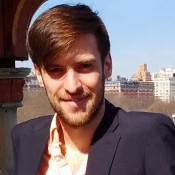 JP Allen grew up in Danville, Kentucky, studied at Middlebury College, worked for local government and a transit startup in New York City, and is now an MFA candidate in poetry at the Johns Hopkins University, where he is also an assistant editor at the Hopkins Review.
Mike White
Two poems from Mike White’s Wordless
followed by a note on the author
Addendum to a Miracle
And then, after
asking for silence, and
for silence please, and
for silence way in the back please,
he made of the many fishes
(churning silver
in the brimful baskets)
just one
irrefutable fish, size
of a single loaf of bread,
and the mouths of the multitude
watered, and
the gills of the dying fish
fanned the poison air.
Mike White
Things Pitched
battles
and a rationale
for the same,
curveballs,
change-ups,
a perfect game.
Mike White
Mike White’s poems have appeared in magazines including Poetry, Ploughshares, FIELD, The New Republic, The Yale Review, and The Threepenny Review. His first collection, How to Make a Bird with Two Hands (Word Works 2012), received the Washington Prize. He lives in Salt Lake City and teaches at the University of Utah.
Addendum to a Miracle
first appeared on Green Mountains Review Online ; Things Pitched
first appeared in The Threepenny Review.
Austin Segrest
Two poems from Austin Segrest’s Barrel Roll
followed by a note on the author
Photo of My Father from the Seventies
Forty looking thirty,
he could fire off with the least provocation
his heart rate, mile time, batting average
in sixth grade—but as for who he is,
this blue-eyed Burt Reynolds, your guess
is as good as his. Pure potential
in a faded Canadian tuxedo,
a pilot light in the center of this seventies
burnish, bell-bottoms flared a foot wide,
these were the years my mother complained
of his walking the house naked,
of the languorous baths and money blown
at the health food store on vitamins and fiber.
I remember taking a shower with him, the sharp,
fake citrus of little hotel shampoos and conditioners,
standing below in the ricochet and run-off.
The idea of him receded behind the specimen,
blurred, streaming, smooth, his flattened hair,
his motions expert—untouched, untold,
altogether unreached body my body nears.
These were the years he sabbaticalled.
Summers in the distant Pacific I half-remember
from visits: fog-damp, the fish ladder, the spit
called Dungeness he walked heroically out to tip
against spitting wind, past the mudflats
and monstrous, polished skeletons of trees.
He tells it how he walked till he couldn’t walk
any farther—my athletic, my academic father—
and there, where the spit runs out, runs on
under the waves, shelving off toward Canada,
where the inner life runs up finally on the outer,
scattered rock-forms rose up out of the gray
and slowly materialized as a herd of seals,
turning as if toward their bull.
Still, it would be years until
he got up the courage to file for divorce.
More than the body, this is the man
my mother recognized in me with horror
the year I lived with her after college —
bitter, bickered away—the year she died.
Now there shall be a man cohered
out of the tumult…Sometimes
I feel my father’s sinewy arm
extend through mine, and I’m in two
classrooms—his rainy Seattle lab
a life away, and my glaring 8 o’clock—chalk in hand
to chart a course across the blackboard’s swirl
of erasure. And the barking of the seals is thundered out,
the lighthouse shrouded.
Pinned to the fridge
like Proteus, the photo keeps its figure.
Austin Segrest
Nuclear Medicine
Weekdays I wheeled the vial
across the hospital,
its fifty-pound lead drum
blowing through the atrium
where sky crashed in
on potted trees, and workmen
were walling up the old
ER entrance where I’d rolled
in my mother, deteriorating,
slumped. No more waiting
room delirium and panic
now. Watching the clock,
I had three minutes to get
the radioactive agent
to its subject, one of a set
of identical twins,
so his heart could betray
its damage. No time to see
that wall close up like the artery
that killed my mother, or the one
that would darken a section
of the vet’s heart muscle.
I took the tunnel
under Clifton Road, the decay drum
catching momentum
down the ramp as I cried out
to strangers, organ transplant,
coming through—some white lie
to clear the way,
not thinking of the beating bag
I’d dreamed of carrying
her heart in, or how being
alone with her dying
left me exposed,
as to a naked dose.
Lying on the scanner bed
in his room of lead,
some Don or Ron, Harry or Larry
was prepped for my delivery.
Not thinking how personal,
how molecular, upheaval
gets inside us. Riddling
the body, the body releasing
that which hurts
yet preserves us—what stress
damages the heart,
what we can measure of it.
Austin Segrest
Originally from Alabama, Austin Segrest teaches literature and creative writing at Lawrence University in north-central Wisconsin. Find out more at austinsegrest.com.
Photo of My Father from the Seventies
first appeared in Southwest Review; Nuclear Medicine
first appeared in The Yale Review.