
Uncategorized
J. Camp Brown
Two poems from J. Camp Brown’s Slow of Speech and Tongue
followed by a note on the author
Cartography is Not the Absence of War
Not by dead reckoning, but by chain
and theodolite, for if one
starts with I reckon, then they
is lost. Not by chained dogs,
though the reach of snarls
delineates, around stakes, circles,
but by triangles. By gores. The angle
up against spirit level. By sine,
height. By altitude, hachures.
Not kedged by North Star, but
by magnetic north:—the compass rose
and the winds, four-cornered marginalia
of cloud-cheeked cherubim.
Not flag. Not fenceline. Not even
the map. But cartography.
Not high ground. Not cover. Not supply line.
Not surprise attack. But mountain.
Forest. River. Narrow gap.
J. Camp Brown
Shape Note Singing School
He expected someone like the circuit rider,
hidebound, draggletailed as a trashboard,
not a Singing Master with breasts heaving
when she breathed in and tongued la’s,
wrapped lips around sol’s, bit her lip for fa,
and for fa and fa again. He shamed to watch
and eyed a knot in the old-growth floor
of that county schoolhouse until she stood
in front of him. “Can I hear just you? Open
the Sacred Harp hymnal, and read and sing.”
another child said Hug-eyed Bill
can’t read. He leered into the tangled hymnal—
axes converged, the spotty staff blurred,
Waht wluod yuo gvie in exhcgane ofr yuor suol?
She raised his face—her fragrant fingers—
and grimaced. “Are you retarded?”
No ma’am. “Well, can you read. . . .
. . . .You can read?”
At home that night he lit the lamp,
flame barely above wickholder,
and the flitter of sooty pages held her shapes
in far-fetched dreams unfettered by buttons.
Hunkered there half the night until
his father coughed, his mattress creaked.
The stolen songbook rasped shut, its cover black
as the barrel of Father’s muzzleloader or God-
forbid, his belt. Over the lamp’s glass chimney, Bill rose,
casting his shape to the ceiling, hawked, spat out
his shadow, and answered the hissing dark.
I can sing.
J. Camp Brown
J. Camp Brown is a bluegrass mandolinist hailing from Fort Smith, AR. His poems have appeared in New England Review, Spillway, Copper Nickel, RHINO, Epiphany, and elsewhere. Since receiving his MFA from the University of Arkansas, he has been the George Bennett Writer-in-Residence at Phillips Exeter Academy and an English teacher at Poughkeepsie Day School.
Cartography is Not the Absence of War" first appeared in Crazyhorse; "Shape Note Singing School
first appeared in Nimrod.
Austin Allen
 Winner of the 11th annual Anthony Hecht Poetry Prize
Judge: Eavan Boland
Austin Allen was born in Middletown, CT in 1984. He has worked as a book editor, educator, journalist, and digital archivist. His poetry has appeared widely in print and online, and his essays appear frequently via the Poetry Foundation website. A graduate of the Johns Hopkins Writing Seminars, he currently lives in Baltimore and teaches as a lecturer in creative writing at Johns Hopkins University.
Two poems from Austin Allen’s Pleasures of the Game
Apollo
We have a problem.
Are we forgetting something?
The moon climbs,
and somehow we can’t
quite seem to place the face.
And this happens sometimes.
We have a problem:
the moon falls
just out of reach, between the hills,
like one of the golf balls
from the old Apollo mission.
Did we leave something behind?
We seem to recall—there was a flag,
artificially stiffened
because there was no wind.
And a little plaque signed
by the president, Nixon.
In five o’ clock shadow,
he lost the debate
to the younger fellow,
but now the harsher face is on the rise.
Are we forgetting something?
Did we leave someone behind?
One of the astronauts, the handsome fellow—
Apollo?
No, that was the name of the mission.
The name on the little plaque had to be Nixon.
And quarters, halves, bits of loose change
wink—sink between the cushions
of the distant hills.
The Waywiser Press
Self-Portrait (The Desperate Man)
Gustave Courbet, c. 1845
Consider my face.
Is it handsomely desperate
or just desperately handsome?
Is each clutched hair in place?
Notice the crimson flush
upon each cheek.
Is that a fever’s rose
or rouge, do you suppose?
If rouge, would my mystique
be heightened? Would you blush?
With whom do I share
this elegant despair?
Such arrogance
as I must have to boast,
“I am the most
arrogant man in France”:
is it not also yours?
Who but yourself, indulging,
summons the force
that draws me in, distorts
my eyes, my ego bulging
toward the terror’s source—
which (it could not be clearer)
is a mirror?
The Waywiser Press
Morri Creech

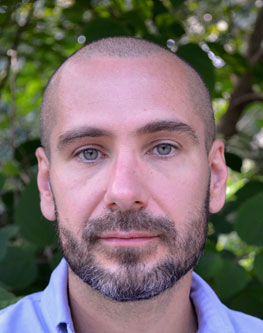 Morri Creech was born in Moncks Corner, South Carolina, USA, in 1970 and was educated at Winthrop University and McNeese State University. He is the author of two previous collections of poetry, Paper Cathedrals (Kent State University Press, 2001) and Field Knowledge (Waywiser, 2006), which received the Anthony Hecht Poetry prize and was nominated for both the Los Angeles Times Book Award and the Poet’s Prize. A recipient of NEA and Ruth Lilly Fellowships, as well as grants from the North Carolina and Louisana Arts councils, he is the Writer in Residence at Queens University of Charlotte, where he teaches courses in both the undergraduate creative writing program and in the low residency M.F.A. program. He lives in Charlotte, North Carolina with his wife and two children.
Matthew Thorburn

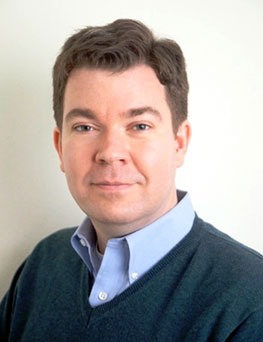 Matthew Thorburn is the author of two previous books of poems, Subject to Change and Every Possible Blue, and a chapbook, Disappears in the Rain. This Time Tomorrow, his third collection, was a finalist for the Anthony Hecht Poetry Prize He is the recipient of a Witter Bynner Fellowship from the Library of Congress, as well as fellowships from the Bronx Council on the Arts and the Sewanee Writers’ Conference.. His poems have appeared in journals such as The Paris Review, Michigan Quarterly Review and Ploughshares, and he has contributed essays and book reviews to Jacket, Pleiades, Rowboat: Poetry in Translation and other journals. He lives in New York City.
Shelley Puhak

 Shelley Puhak was born in Washington, D.C. and grew up in Maryland. She holds an MFA from the University of New Orleans and an MA from the University of Delaware. Her first collection, Stalin in Aruba (Black Lawrence/Dzanc), was awarded the Towson Prize for Literature, and Guinevere in Baltimore won the eighth Anthony Hecht Poetry Prize. Her poems have appeared in many journals, including Carolina Quarterly, FIELD, and Ninth Letter. She teaches at Notre Dame of Maryland University, where she is Eichner Professor of Creative Writing.
Stephen Kampa

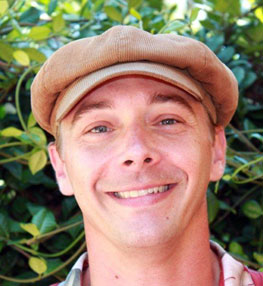 Stephen Kampa was born in Missoula, Montana, in 1981 and grew up in Daytona Beach, Florida. He received a BA in English Literature from Carleton College and an MFA in Poetry from the Johns Hopkins University. His first book, Cracks in the Invisible, won the 2010 Hollis Summers Poetry Prize and the 2011 Gold Medal in Poetry from the Florida Book Awards. His poems have also been awarded the Theodore Roethke Prize, first place in the River Styx International Poetry Contest, and two Pushcart nominations. He currently divides his time between teaching poetry at Flagler College in St. Augustine, Florida and working as a musician, most recently with Florida swamp blues master Robert “Top” Thomas and as a session player for WildRoots Records.
V. Penelope Pelizzon
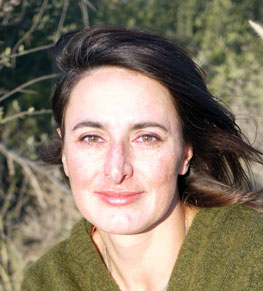 V. Penelope Pelizzon was born in 1967 in Massachusetts. Her first poetry collection, Nostos (2000), won the Hollis Summers Prize and the Poetry Society of America’s Norma Farber First Book Award. She is also co-author of a critical study, Tabloid, Inc.: Crimes, Newspapers, Narratives (2010), and other essays on visual culture. Her poems have received the Amy Lowell Travelling Poetry Scholarship and a Discovery/The Nation Award, while her prose has twice been listed among the year’s “notable essays” in the Best American Essays series. Whose Flesh is Flame, Whose Bone is Time was a finalist for the Anthony Hecht Poetry Prize. A diplomat’s spouse, she navigates between postings abroad and her current position as Associate Professor of English at the University of Connecticut.
Serving People
Sed at turpis vel ipsum adipiscing viverra eu eget nisi. Praesent neque turpis, volutpat ultrices porta sit amet, tempus ut ante. Nunc aliquet ultrices tortor, id accumsan metus porttitor eu. Mauris aliquet metus a leo iaculis at commodo metus dictum. Proin nulla nibh, tempor dictum luctus hendrerit, egestas quis enim. Mauris lacinia ultrices sem, at accumsan mi consequat sed. Continue reading
Mary Elizabeth Pope
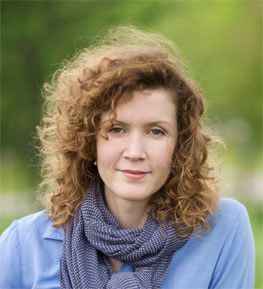 Mary Elizabeth Pope was raised in Mt. Pleasant, Michigan. She holds a B.S. and M.A. in English from Central Michigan University, and a Ph.D. in English and Creative Writing from the University of Iowa, and currently lives in Boston, Massachusetts, where she is Associate Professor of English at Emmanuel College. Her short stories and essays have been featured in literary magazines such as Florida Review, Bellingham Review, PoemMemoirStory, Passages North, and many others. A Michigan native, she spends her summers writing on the Leelanau Peninsula.